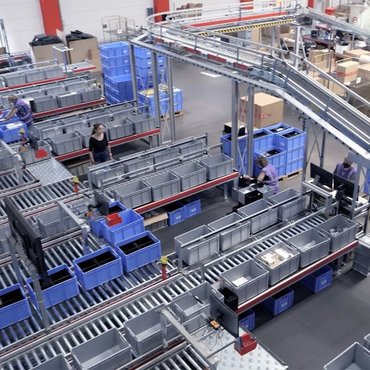
Why reusable packaging
needs a reliable data layer

Why reusable packaging needs a reliable data layer
Reusable packaging solves physical problems. But managing thousands of reusable containers creates a data problem.
Many companies know exactly how many containers they purchased. Far fewer know where those containers are, how efficiently they're circulating, or which ones have disappeared from the supply chain.
As reusable fleets grow, spreadsheets, manual counts and disconnected systems quickly reach their limits.
The packaging still works. The visibility doesn't.
That's why more companies are realizing that reusable packaging needs something more than durable plastic. It needs a reliable data layer.
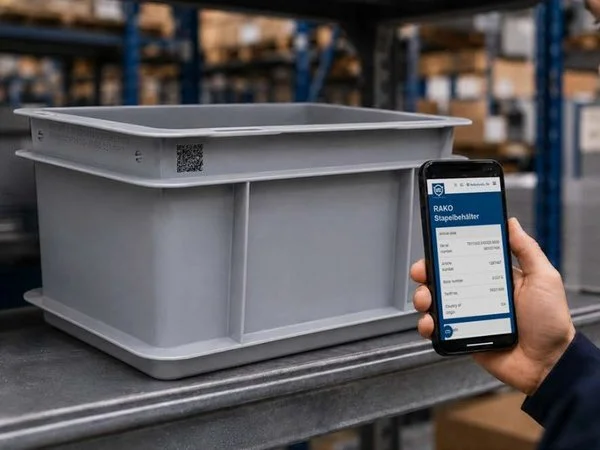
The challenge isn't the container
When companies invest in reusable packaging, they usually focus on physical performance:
- durability
- product protection
- stacking
- ergonomics
- compatibility with automated handling
Those are all important.
But once thousands of containers start moving between production sites, warehouses, logistics providers and customers, another challenge appears.
Simple questions suddenly become difficult to answer
- Where are our containers?
- Which customers still have them?
- How many are in circulation?
- Which assets should be replaced?
- Are we actually achieving the expected return rates?
Without reliable identification, every answer becomes an estimate.
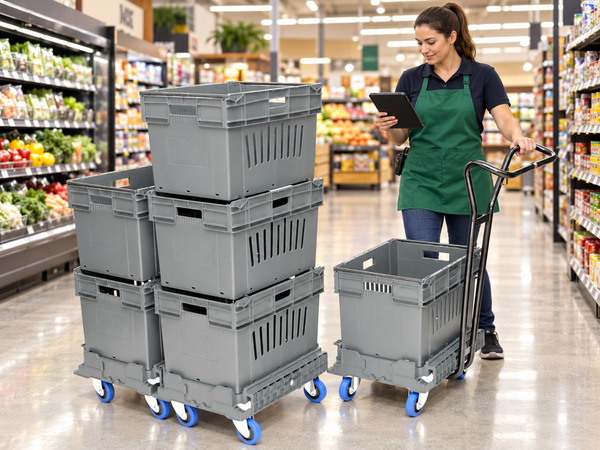
Automation changes the rules
Modern warehouses depend on accurate data.
Conveyors, AS/RS systems and warehouse management software all need to recognize every load carrier automatically.
If a reusable container can't be identified consistently, automation becomes less efficient and more dependent on manual intervention.
Reusable packaging is no longer just a transport asset. It's part of the digital supply chain.
Traceability is becoming a business requirement
The need for better packaging data isn't driven only by operational efficiency.
Companies also face increasing pressure to demonstrate reuse, improve traceability, and support circular economy initiatives.
With regulations such as the EU Packaging and Packaging Waste Regulation (PPWR) and Digital Product Passport (DPP) requirements on the horizon, many logistics teams are looking for practical ways to prepare without adding unnecessary complexity.
Whether the driver is sustainability, automation, or regulatory compliance, one thing remains the same: You can't manage what you can't identify.
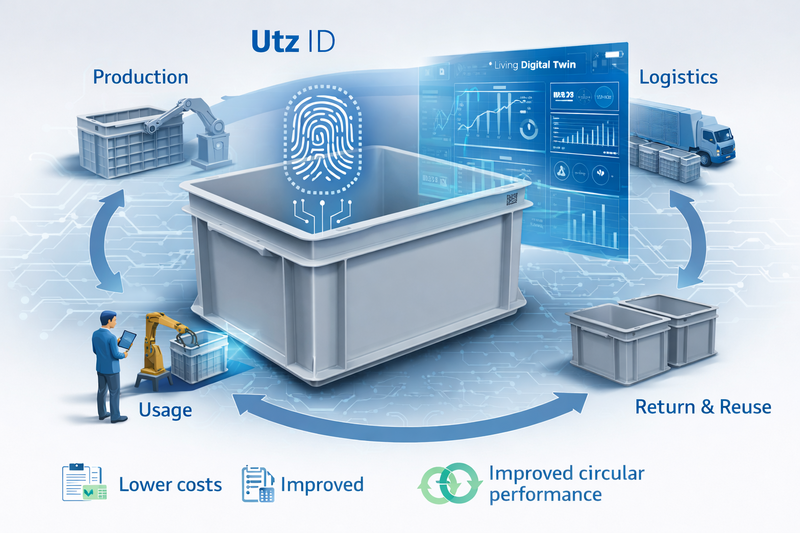
The missing piece is a digital identity
A reliable data layer connects every physical asset with structured digital information.
Instead of simply knowing that you own 20,000 containers, you can understand how they're being used throughout their lifecycle.
That creates opportunities to:
- improve asset tracking
- reduce container losses
- increase return rates
- support warehouse automation
- simplify compliance reporting
- make better supply chain decisions
The container doesn't change. The visibility does.
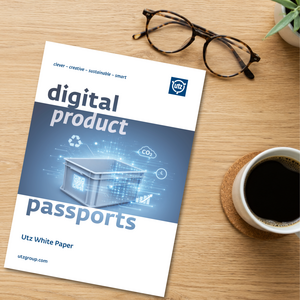
Download the white paper
Digital Product Passports are quickly moving from future concepts to business reality. Our white paper explains how they can help you prepare upcoming traceability and sustainability requirements while improving asset visibility, supporting warehouse automation, and strengthening circular logistics.
Inside you'll learn:
- why reusable packaging needs a digital identity
- how Digital Product Passports apply to transport packaging
- what role packaging data plays in automation
- practical considerations for implementation